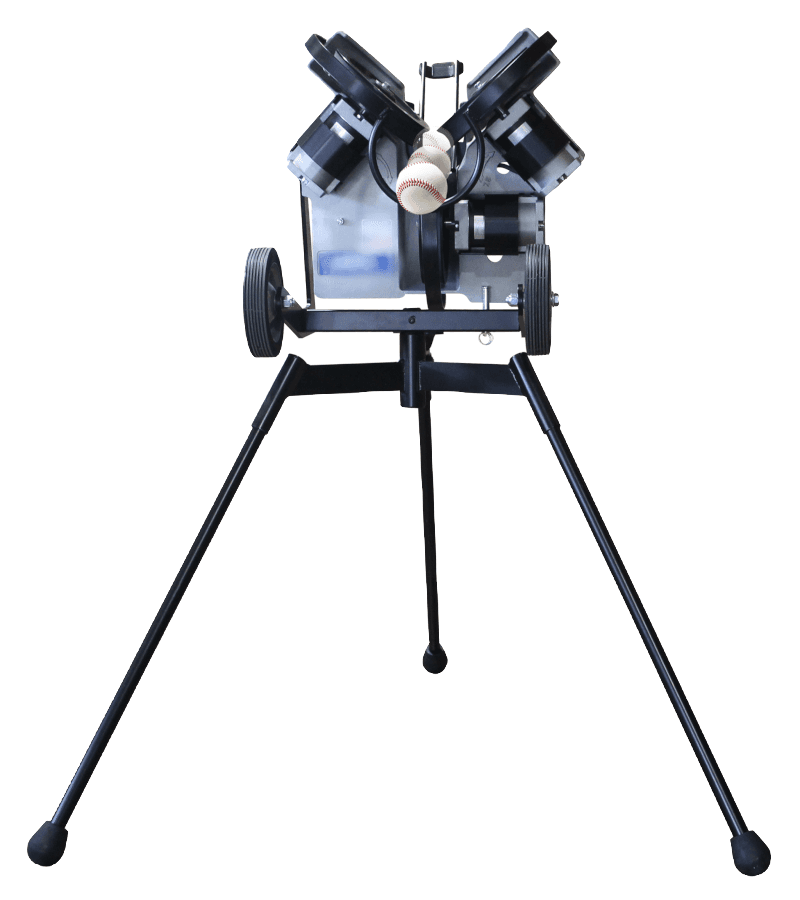
When it comes to pitching machines, the first step is picking out the right machine(s) to meet your needs. But the decisions don't stop there. Next, you have to figure out which pitching machine balls are right for your machine AND for accomplishing your goals.
In this article, we'll go over the different kinds of balls that are safe to use in pitching machines (and which ones aren't), what goals different ball types help with, and offer some suggestions to ensure your pitching practice is fun and safe.
The Basics of Pitching Machine Balls
First, there are a couple of basics to go over when it comes to pitching machine balls. One, read the manual that comes with your machine. It will include a recommendation of what type of balls work with your machine and which ones won't.
For example, the Hack Attack manual states it will throw a "leather, poly, or foam ball. Synthetic leather balls are not recommended..." So, for this pitching machine, there are plenty of options as to what type of ball you can use. However, if you use synthetic leather, which the manufacturer states not to do, then your machine won't last as long and there could be other risks including safety. Next, do not mix ball types. This appears to be pretty standard advice across the board. It is okay to use different types of balls in your pitching machine, but not at once. If you have a mix of poly, leather, dimpled, etc. in the machine at the same time, the pitches won't be consistent. Potentially, it could be a safety risk. For best results, always stick to one type of ball at a time when using your machine.
Dimple Pitching Machine Balls
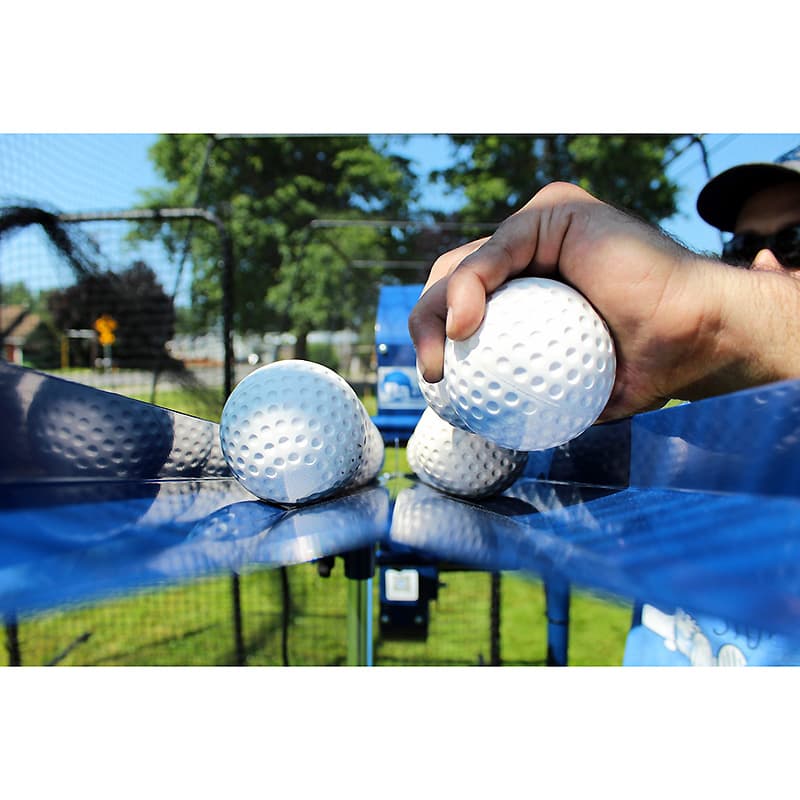
Dimpled baseballs and softballs are specifically designed for use with pitching machines. So, what are the benefits of these pitching machine balls? First, they travel faster than other types of balls. These balls are still the same size and weight as leather balls, so they feel like regulation balls when hitting.
Also, dimpled balls have pinpoint accuracy, which makes them perfect for training when you want consistency.
Lastly, dimpled balls won't wear down your pitching machine. In contrast, regulation base/softballs damage the wheels over time and, in turn, the machines damage the balls by ripping seams and ripping off the ball's covers.
Additionally, players like dimpled balls because they don't sting hitter's hands, while coaches are happy to know the balls won't dent aluminum bats.
Real Leather Baseballs/Softballs
Some machines, such as the Bata-2 Baseball Pitching Machine, states that it is designed specifically for throwing real leather baseballs. However, these "real" balls are not your typical league balls. Instead, they provide a real game ball feel, sound, and reaction. Also, they are often the same size and weight as regulation balls. These balls are great for training when your goal is to get that real ball feel.
"Real" pitching machine balls are available in dimpled, poly, and ballistic leather, a strong leather-like material that won't break down your machine.
Lite and Mini Balls
Lite and mini balls work well with indoor machines. While they provide realistic throws, they don't sting players and are less likely to damage surrounding fixtures.
Lite
Lite pitching machine balls throw true, even at regulation pitching distances. Also, they keep their original shape coming out of the pitching machine, regardless of speed. And they are safe for indoor hitting even without a batting cage.
Mini
As their name implies, mini balls are smaller than regulation-sized balls. Because of their small size, these balls are ideal for teaching hitters to track the ball from its release point to the impact zone. Moreover, this helps increase the hitter's focus. Lastly, these small balls improve depth perception when the player keeps their head still and eyes level.
Never Use Regulation Balls
Pitching machines are not made to be used with regulation balls, even though many machines can throw these balls. However, regulation balls are not made for machine compatibility and will wear down not only your machines but also your balls. For one thing, the seams on these balls damage the wheels on the machine. Also, paint scrapes onto the wheels, which makes them slick and may cause issues with flying accuracy. Lastly, the glue on regulation balls wears down, which causes the covers of these balls to strip off with repeated use.
So, to be safe and get the most out of pitching practice, stick with pitching machine balls for better accuracy, longer machine life, and a greater experience overall.
Here's a detailed list of manufacturer's ball recommendations for the machines that Practice Sports carries:
|
Machine |
Ball Type |
|---|---|
|
Lite-Flite baseballs |
|
|
11" or 12" softballs Baseballs |
|
|
Baseballs |
|
|
11″ or 12″ softballs Baseballs |
|
|
JUGS polyurethane-foam 5-in./0.5-oz. Small-Balls |
|
|
11″ or 12″ softballs Baseballs |
|
|
Baseballs |
|
|
11″ or 12″ softballs, LeatherLast softballs Sting-Free softballs |
|
|
Baseballs |
|
|
Baseballs |
|
|
Dimpled balls are more consistent and will last longer. |
|
|
Ballistic leather |
|
|
Baden Kevlar Ballistic Seamed Baseballs/Softballs |
Contact us if you have questions or would like a quote for your next project.
Share this article