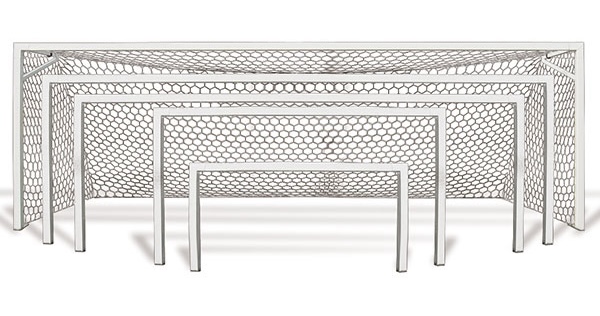
Soccer is one of the most popular sports in the world, enjoyed by people of all ages. When it comes to playing the game, it's important to use the right youth soccer goal size for each age group. This article explores the difference between US Youth Soccer and the American Youth Soccer Organization (AYSO) and provides a chart defining the optimal sizes of soccer goals, balls, and more for different age groups. Understanding the proper goal size ensures that young players are safe, confident, and able to fully enjoy the game.
US Youth Soccer vs. AYSO
Before we get to the size chart, the first thing to recognize is that there are two different organizations for youth soccer in the US. One is US Youth Soccer, a member of FIFA and US Soccer, and the other is American Youth Soccer Organization (AYSO), the oldest youth soccer organization in the United States. For the most part, the youth soccer goal size guides are the same for both organizations; However, AYSO also includes the following recommendations:
-
6’6″ x 12′ for U9 and U10
-
6’6″ x 18’6″ for U11 and U12
Soccer Ball Size
On the Youth Soccer Goal Size by Age chart, the soccer ball size is also listed. The options on the chart range from #3 to #5; however, there are also #1 and #2 soccer balls. Size #1 balls are used for trophies and awards, while size #2 balls are not used often by most coaches. As you see on the chart, the recommended size for U6-U8 is #3. Next, U10, U11, and U12 all use #4. Lastly, U13 and up play with size #5 balls. Of course, there are times a coach may opt for a different sized soccer ball, such as for practicing footwork, but these sizes are standard overall.
|
Age Group |
Soccer Ball Size |
Goal Size in Feet |
Weight in Ounces |
Game Length (Time) |
Overtime Periods |
Number of Players |
|---|---|---|---|---|---|---|
|
19 and under |
#5 |
8'x24' |
14-16 ozs. |
Two 45’ halves |
Two 15’ halves |
|
|
18 and under |
#5 |
8'x24' |
14-16 ozs. |
Two 45’ halves |
Two 15’ halves |
|
|
17 and under |
#5 |
8'x24' |
14-16 ozs. |
Two 45’ halves |
Two 15’ halves |
|
|
16 and under |
#5 |
8'x24' |
14-16 ozs. |
Two 40’ halves |
Two 15’ halves |
|
|
15 and under |
#5 |
8'x24' |
14-16 ozs. |
Two 40’ halves |
Two 15’ halves |
|
|
14 and under |
#5 |
8'x24' |
14-16 ozs. |
Two 35’ halves |
Two 10’ halves |
|
|
13 and under |
#5 |
8'x24' |
14-16 ozs. |
Two 35’ halves |
Two 10’ halves |
|
|
12 and under |
#4 |
7'x21' |
11-13 ozs. |
Two 30’ halves |
Two 10’ halves |
Recommendation: 8 |
|
11 and under |
#4 |
7'x21' |
11-13 ozs. |
Two 30’ halves |
Two 10’ halves |
Recommendation: 8 |
|
10 and under |
#4 |
6.5'x18.5' |
11-13 ozs. |
Two 25’ halves |
None |
Recommendation: 6 |
|
8 and under |
#3 |
4'x6' |
11-12 ozs. |
4 -12’ quarters |
None |
Recommendation: 4 |
|
6 and under |
#3 |
4'x6' |
11-12 ozs. |
4 – 6’ quarters |
None |
Recommendation: 3 |
Training Goals vs. Match Goals
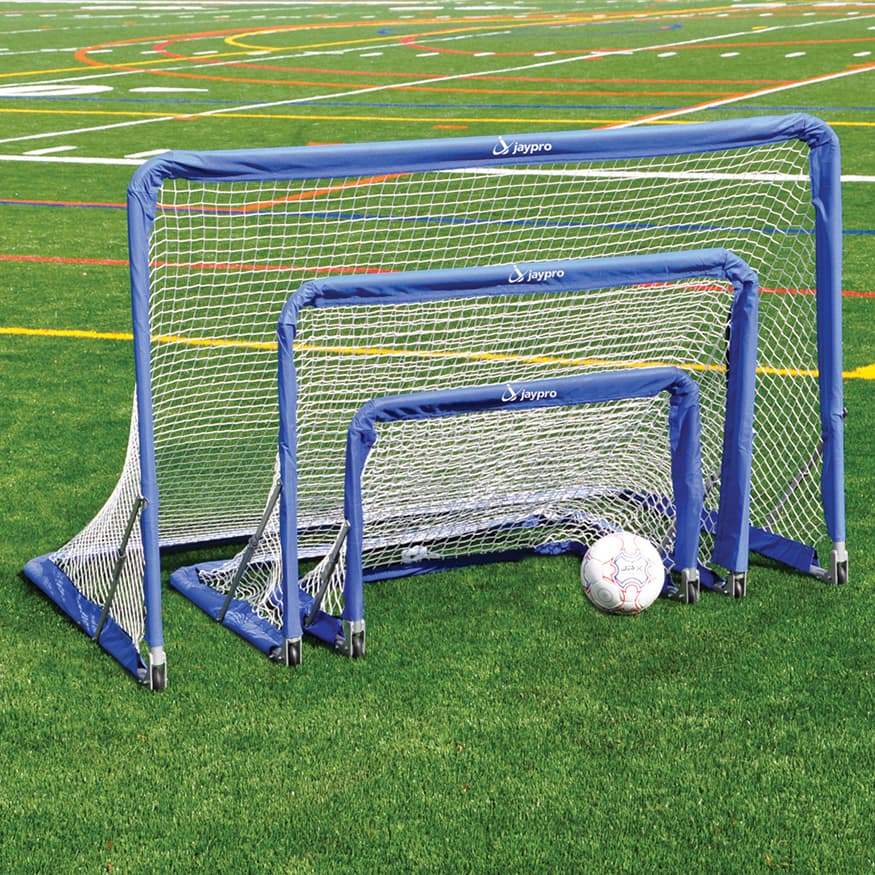
Now that you've figured out what size goal is appropriate for your youth team, the next thing to consider is what type of goal to use. So, what is the difference between training goals and game day goals? Since practice goals are meant to be lightweight and portable, they are often made of lighter and less durable material, like plastic. This allows coaches and players to easily set up and move soccer goals for practice, and then store them away when not in use. However, these goals aren't quite as tough as the aluminum goals built for game time.
Contact Us
Contact us today for a free quote and expert guidance.
1-800-877-6787 Monday through Friday 8:00 AM to 5:30 PM CST.
Follow us on Facebook for inspiration and exclusive discounts.
Share this article