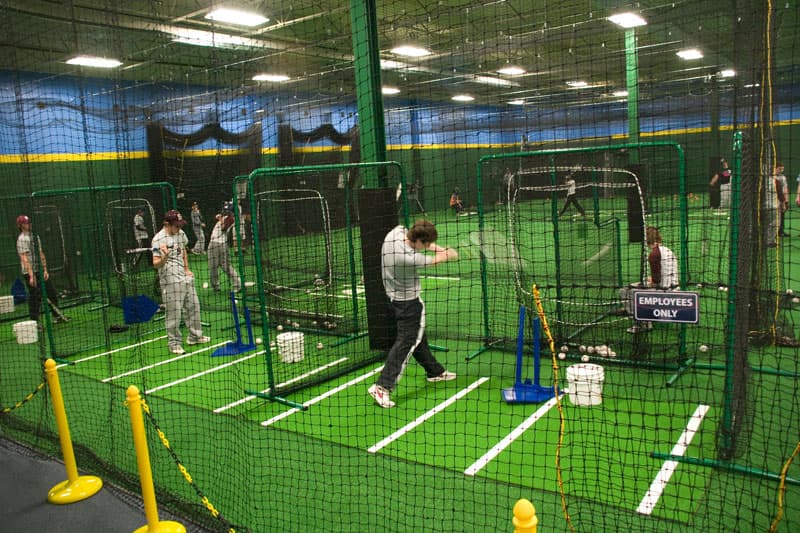
Baseball / Softball Cage and Field Dimensions
When it comes to baseball and softball, you need to think beyond just the floor space and account for things like fly balls. Your indoor facility needs to comfortably fit batting cages, pitching mounds, and a safe, usable fielding area.
Here are the target key dimensions:
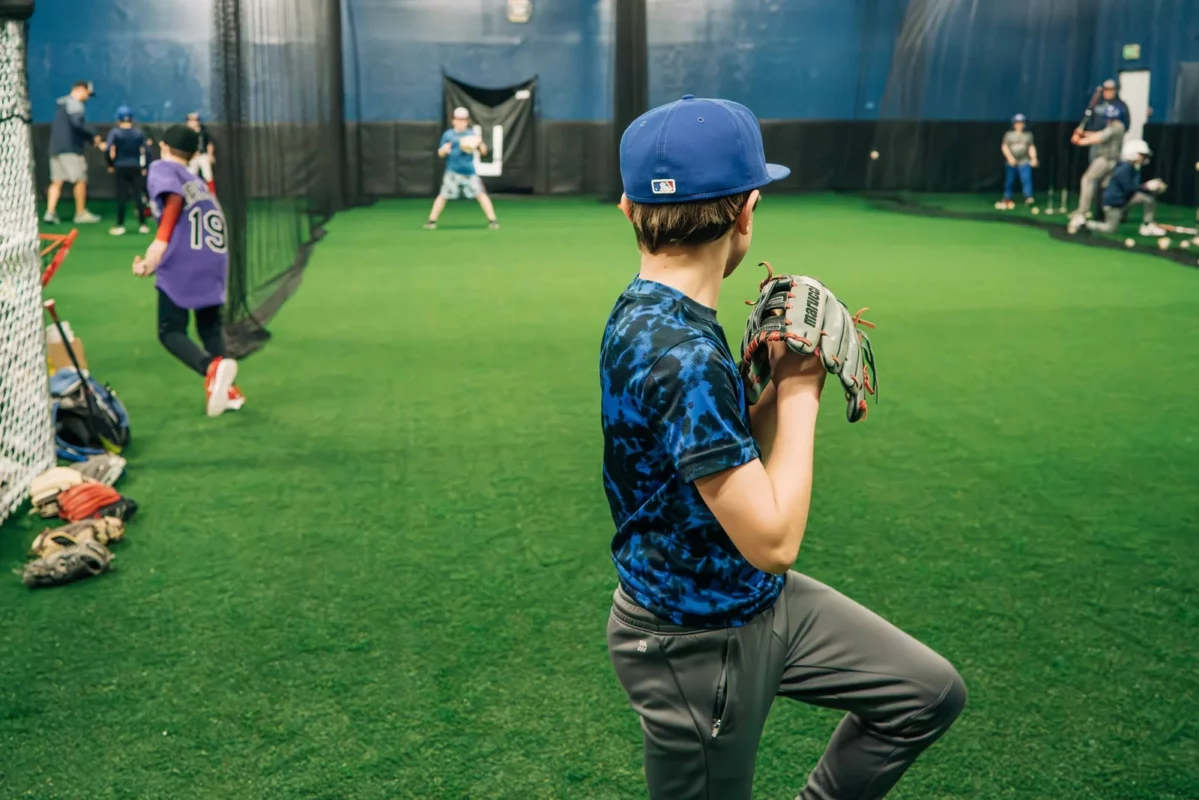
- Batting Cages: For one cage, aim for a space that is 12-14 feet wide, 55-70 feet long, and 12-16 feet high. This provides enough room for the swing and the protective netting.
-
Full Infield Practice: If you want to run drills that mimic a real game, you'll need a dedicated area of at least 90 feet by 90 feet.
-
Full-Size Indoor Field: If your budget and land allow, a full-size indoor field comes in at approximately 200 feet by 200 feet.
-
Ceiling Height: This is often the most overlooked part. To allow for realistic pitching and pop-ups, you absolutely need a minimum ceiling height of 20 to 30 feet. Anything less will severely limit your training options.
Basketball Court Dimensions
For an indoor basketball court, sticking to the standard dimensions is key, whether you're hosting competitive games or just running drills. Here's a breakdown of the standard sizes:
-
Full-Size Court (Professional/Collegiate): If you're building a facility that could host serious tournaments, you'll need the NBA and NCAA standard of 94 feet long by 50 feet wide.
-
High School Court: For courts geared toward younger or high school athletes, the court can be slightly smaller, measuring 84 feet long by 50 feet wide.
-
Half-Court Practice Area: For simpler practice drills or setting up multiple courts side-by-side, a half-court area measuring 47 feet by 50 feet is ideal.
-
Ceiling Height: Just like with baseball, ceiling height is critical here. To ensure proper arc and clearance on shots, you need a minimum ceiling height of 25 feet.
Indoor Soccer Field Dimensions
When designing for indoor soccer, there are different styles of play to consider from fast-paced Futsal to full 11v11 action. This determines the kind of field size you need, and, crucially, you must have enough clearance for player movement.
Here are the ideal dimensions, broken down by player count:

-
Small-Sized Field (5v5 or Futsal): This format is quick and requires less space. You should be planning for a field that is roughly 82 feet long by 49 feet wide.
-
Medium-Sized Field (7v7): If you're targeting youth leagues or slightly larger scrimmage formats, aim for a field of around 140 feet long by 70 feet wide.
-
Full-Sized Indoor Soccer Field (11v11): This is the biggest commitment. To accommodate a regulation-style game, your field will need to be substantial, measuring between 200-250 feet long by 100-150 feet wide.
-
Ceiling Height is a Must: Don't forget about the vertical space. To allow for high clearances on goal kicks and prevents balls from constantly hitting the structure and interrupting play, we recommend a ceiling height of 25-30 feet.
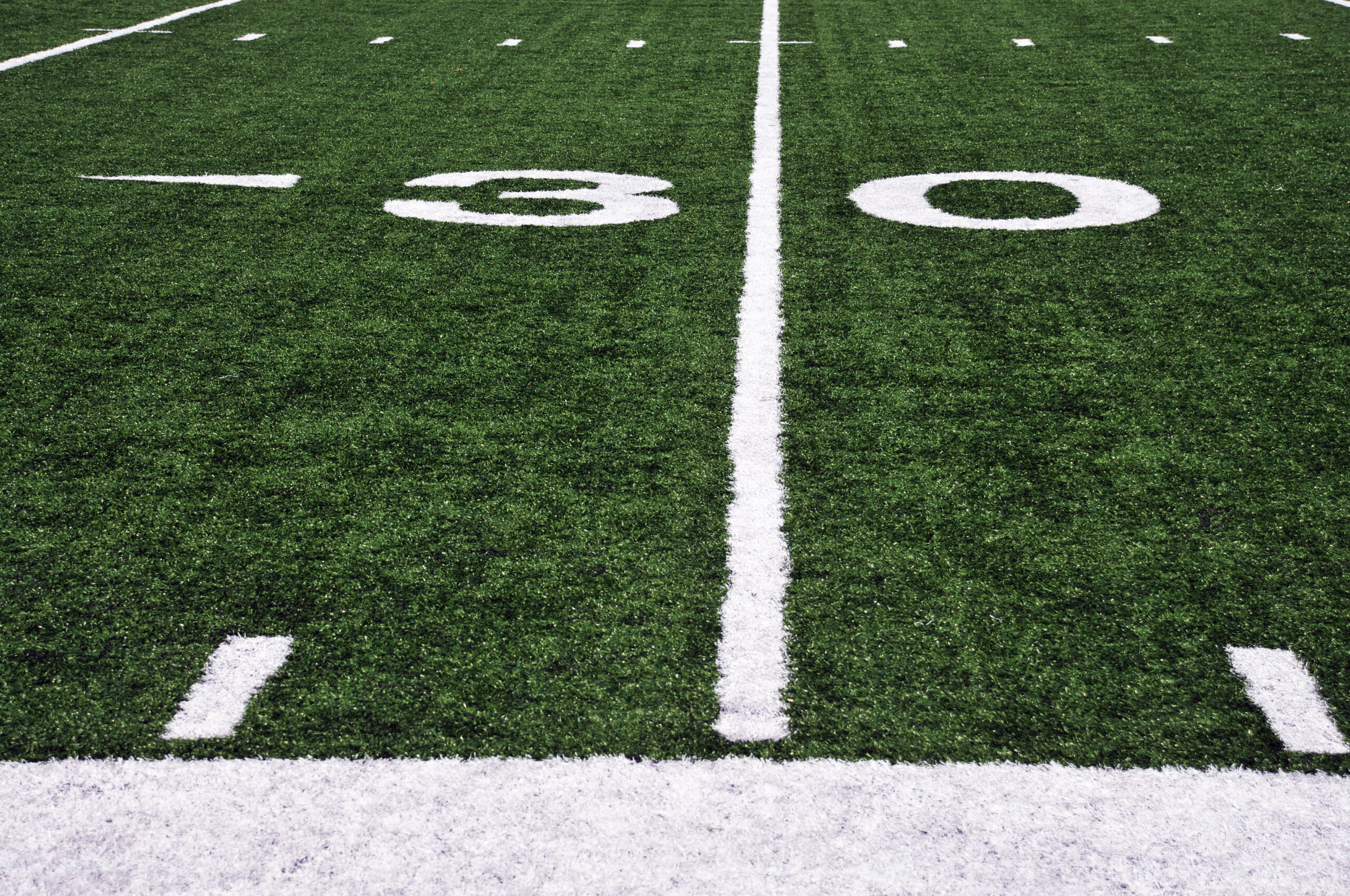
Indoor Football Practice Facility Dimensions
Planning for an indoor football facility is usually the biggest challenge, as the space requirements are massive. You need enough room to run full-scale drills and safely accommodate an entire team's practice.
Here are the critical dimensions for a high-quality football training area:
-
Full-Size Field: For a facility that can truly host a complete practice, including the critical end zones, you should be planning for a space that is 360 feet long by 160 feet wide.
-
Half-Field Training Area: If space or budget constraints mean you can't build a full field, a functional half-field training area will need to be 180 feet by 160 feet. This still gives you enough room for most position-specific and conditioning drills.
-
Ceiling Height: This is non-negotiable for football. Because of punts, field goals, and deep passes, you need serious vertical clearance. A minimum of 35 feet is required, but you should aim for 50 feet or more if possible. That height is ideal for realistic kicking and passing drills.
Additional Considerations for All Indoor Sports Facilities
While getting the field dimensions right is step one, the quality of your facility depends on key operational features. Don't overlook these crucial elements when finalizing your plans:
-
Lighting: This is non-negotiable. You need bright, even lighting across every court and field. Poor visibility impacts performance and safety in all sports.
-
Flooring and Turf: You must choose the right surface material for the intended use. This means high-quality hardwood for basketball, and durable, appropriate synthetic turf for sports like soccer, football, and baseball.
-
Ventilation & Climate Control: To guarantee your facility is usable year-round, and comfortable for athletes, invest in proper HVAC systems. Good airflow and consistent temperature control are essential.
-
Spectator Seating: If you plan on hosting games or tournaments, make sure you designate clear, safe space for bleachers and other seating.
By carefully planning for these dimensions and incorporating critical operational features, you're setting yourself up to create a high-quality, highly functional indoor sports facility that will truly meet the needs of athletes and coaches across various disciplines.
Need Help Planning your Space?
With the right supplies, a clear process, and a few pro tips, setting up your own indoor sports facility is easier than you might think. Whether it’s for year-round training, safer practice, or a custom fit for your space, this project can transform how you train.
Contact us today for a free quote and let our team help you get started with the materials and guidance you need for a professional-quality setup.
1-800-877-6787 Monday through Friday 8:00 AM to 5:30 PM CST
Join us on Facebook for more inspiration.
Share this article
Related Articles
5 Rental Amenities You Can Add to Increase Resident Retention