Thanks for reading our guide on how to buy a field cover.
Let's get started!
How to Buy a Field Cover
There are two basic types of field covers.
There are base, or spot covers, and there are full field covers.
To help determine which cover or covers you need for your field, you’ll need to consider three factors: field size, how you’ll be using your field covers, and the frequency of field cover use.
How to Determine if You Need a Spot Cover or a Field Cover
Field Size and Plate Dimensions
Here’s a list of typical plate and mound area diameters based on field size.
Little League Fields
Pitching Mound – 5’ radius from center of mound (10 ft diameter)
Bases – 9’ radius from center of base
Home Plate – 9’ Radius from apex of home plate
Base Distance –60’
NFHS, NCAA, MLB, MiLB, IBAF
Pitching Mound – 9’ radius from center of mound (18 ft diameter)
Bases – 9’ radius from center of base
Home Plate – 9’ Radius from apex of home plate
Base Distance – 90’
How Will You Use Your Field Cover?
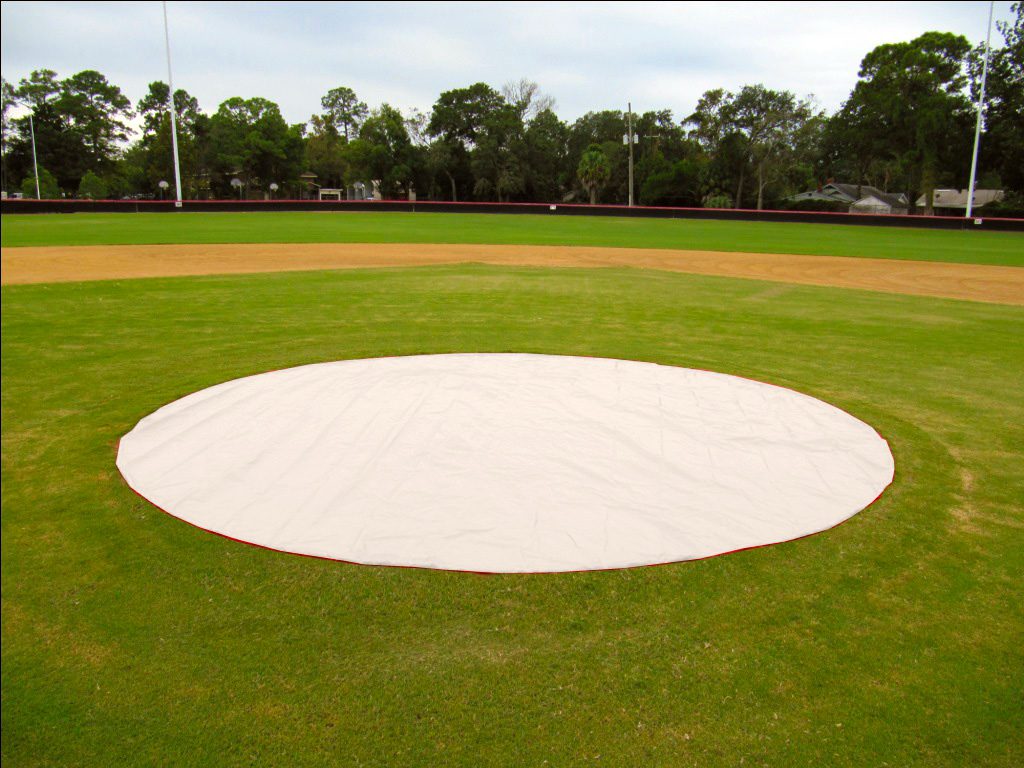
The purpose of the spot cover will also determine the size needed. For instance, if the cover is going to be used on a typical 18 foot diameter mound during periods of rain, then you’ll want to purchase a 20 foot diameter rain cover to help push rainwater away from the mound and into the grass.
If, however, the cover is helping to trap moisture, in the mound for example, then you’ll want an 18-foot diameter cover so that the cover doesn’t extend beyond the mound and kill the grass.
Weighted vs. Non-Weighted Field Covers
Weighted rain covers feature a weight hemmed into the circumference of the cover. This weight keeps the rain cover in place without the aid of sandbags or ground stakes, even in high winds.
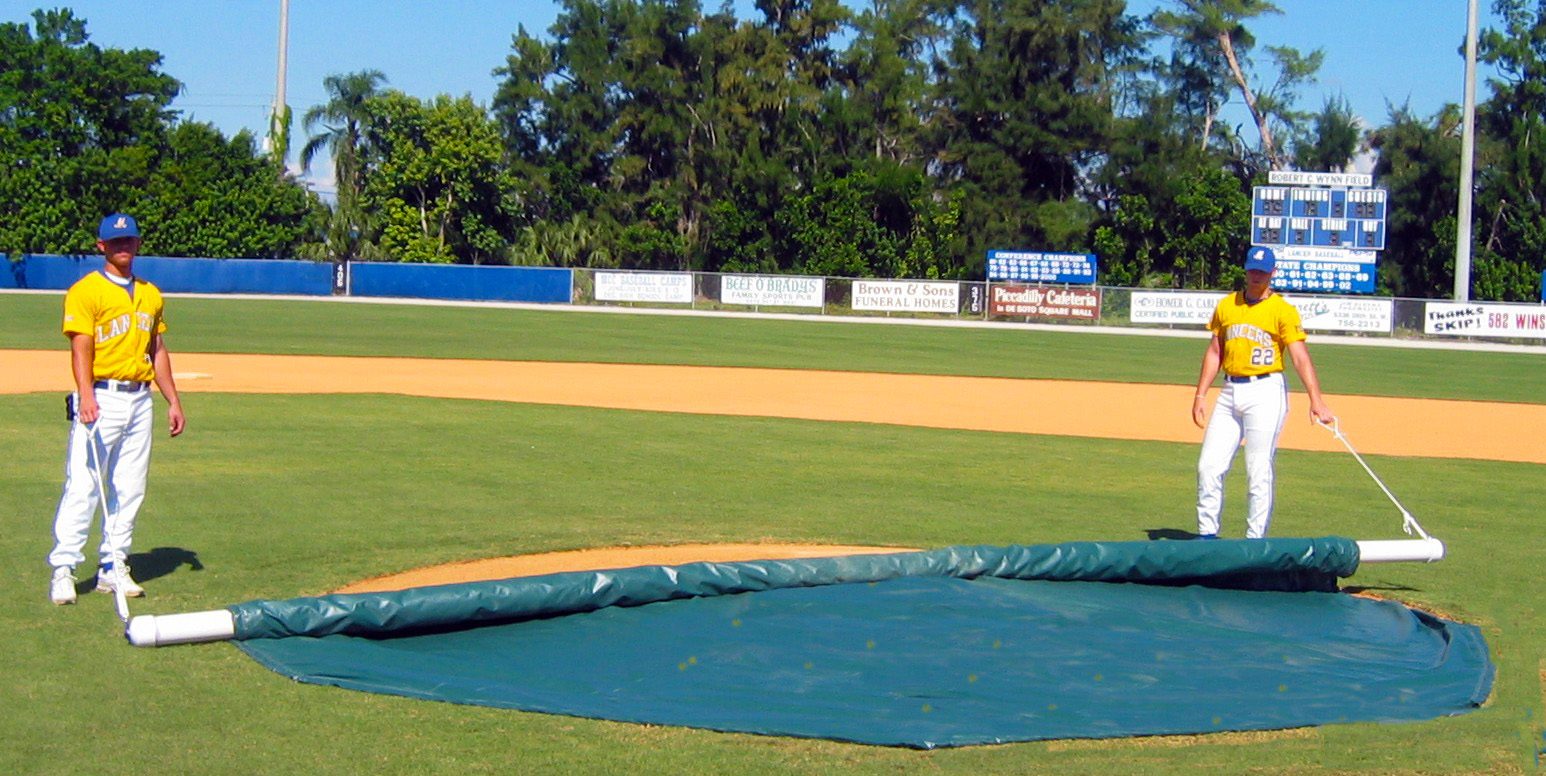
When purchasing weighted rain covers, be sure that the vinyl is of a heavy weight, at least 14 oz. Keep in mind that 18 oz. vinyl will hold up better over time, especially if subjected to daily use. Weighted rain covers are more difficult to maneuver, so you may want to consider an installer device to help move them.
Non-weighted rain covers can be lighter weight and less expensive than weighted rain covers, and they feature grommets for use with ground stakes to help keep them in place when windy.
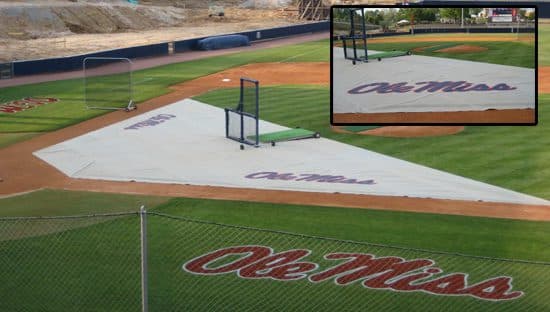
Full Infield Covers
To help prevent water from running under the tarp and soaking your infield dirt, be sure that the rain cover blankets the home plate circle, the coach’s boxes and extends 3-5 feet into the outfield grass.
Little League Fields with 60’ Bases = 100’ x 100’ Full Infield Cover
Baseball with 90’ Bases = 170’ x 170’ Full Infield Cover
Softball with 60’ Bases = 110’ x 110’ Full Infield Cover
Frequency of Use
Full Infield Covers can be heavy, so you may be tempted to use a lightweight 4 oz. material. But if your cover is going to be subject to frequent use, you may want to consider a 10 oz. full vinyl cover for your infield to help it stand up to abuse over time.
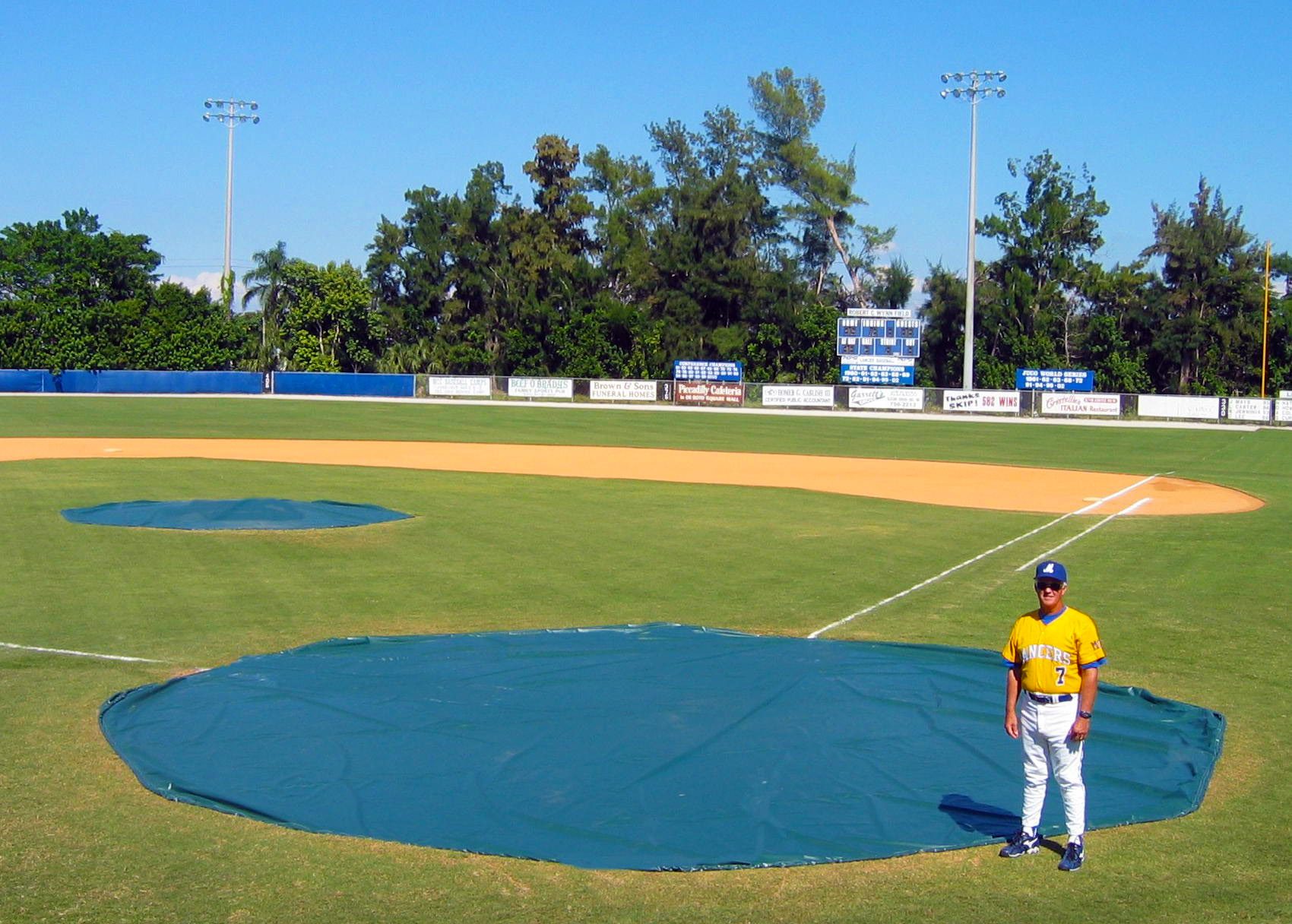
By considering these three factors 'covered' on our guide on how to buy a field cover, you'll make the best purchasing decision for your facility.
As always, be sure to leave questions in the comments section.
Share this article