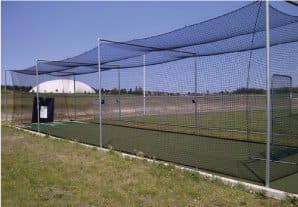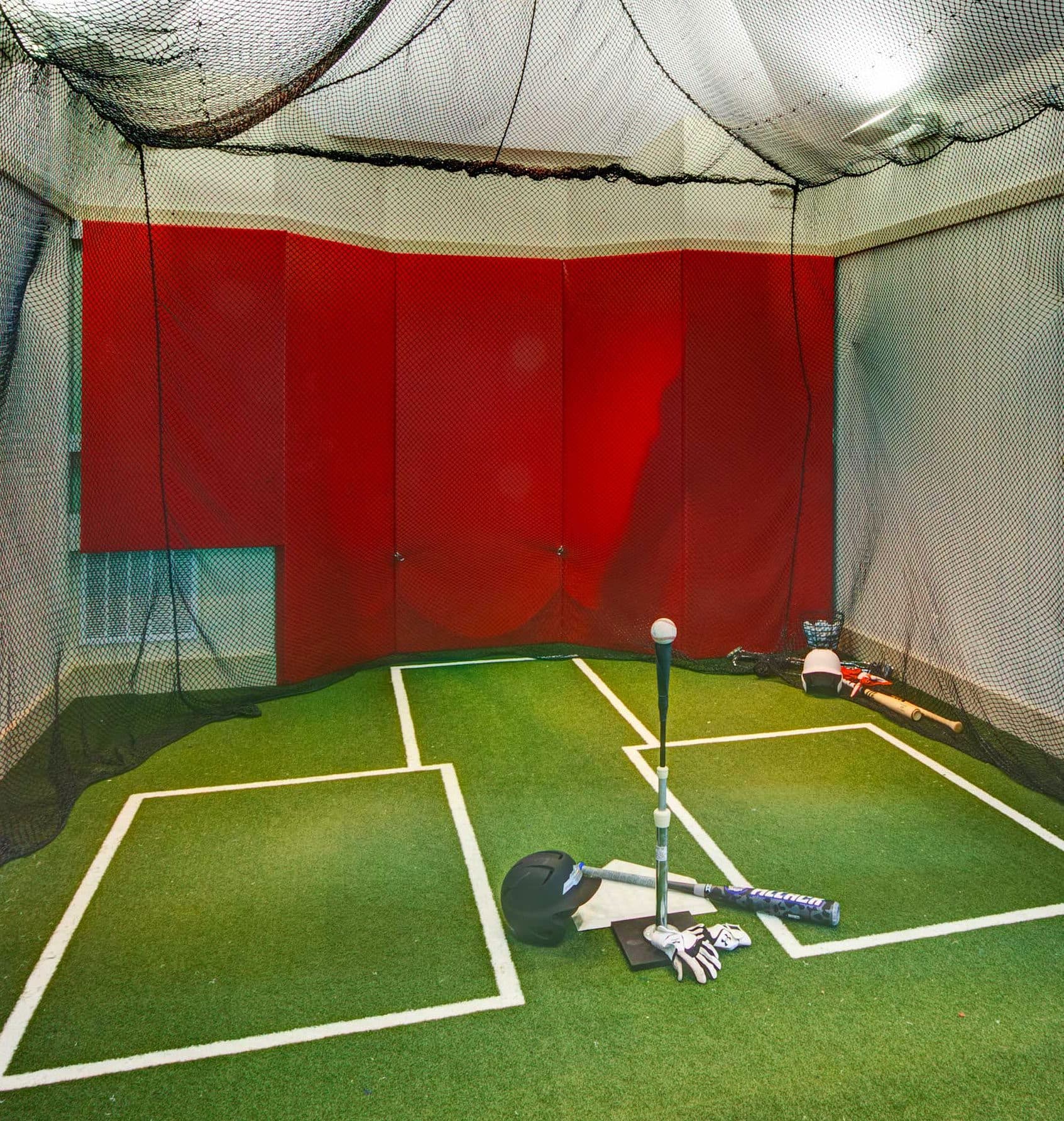
Batting cage practice provides many benefits, but not everyone has the luxury of nearby cages. However, if you have a garage with some spare room, it is easy and affordable to build your own garage batting cage. Not only do batting cages fit in smaller areas than you'd think, but also plenty of products on the market offer maximum protection for lights, walls, and other important items.
This article offers size recommendations needed for cages, an explanation of the different ways to install a cage (ceiling rafters vs. no rafters), and a guide on how to get the best protection for your ceilings, lights, and passersby. Plus, watch the included videos to learn how to install NetShield for extra protection and see a 90mph fastball hit the net.
Garage Batting Cage Size
For your garage batting cage, a minimum of 12 feet in width is the standard space recommendation. Exceptions to this rule include:
-
Batting cages strictly for children's use
-
Areas that include extra room to move for your swing
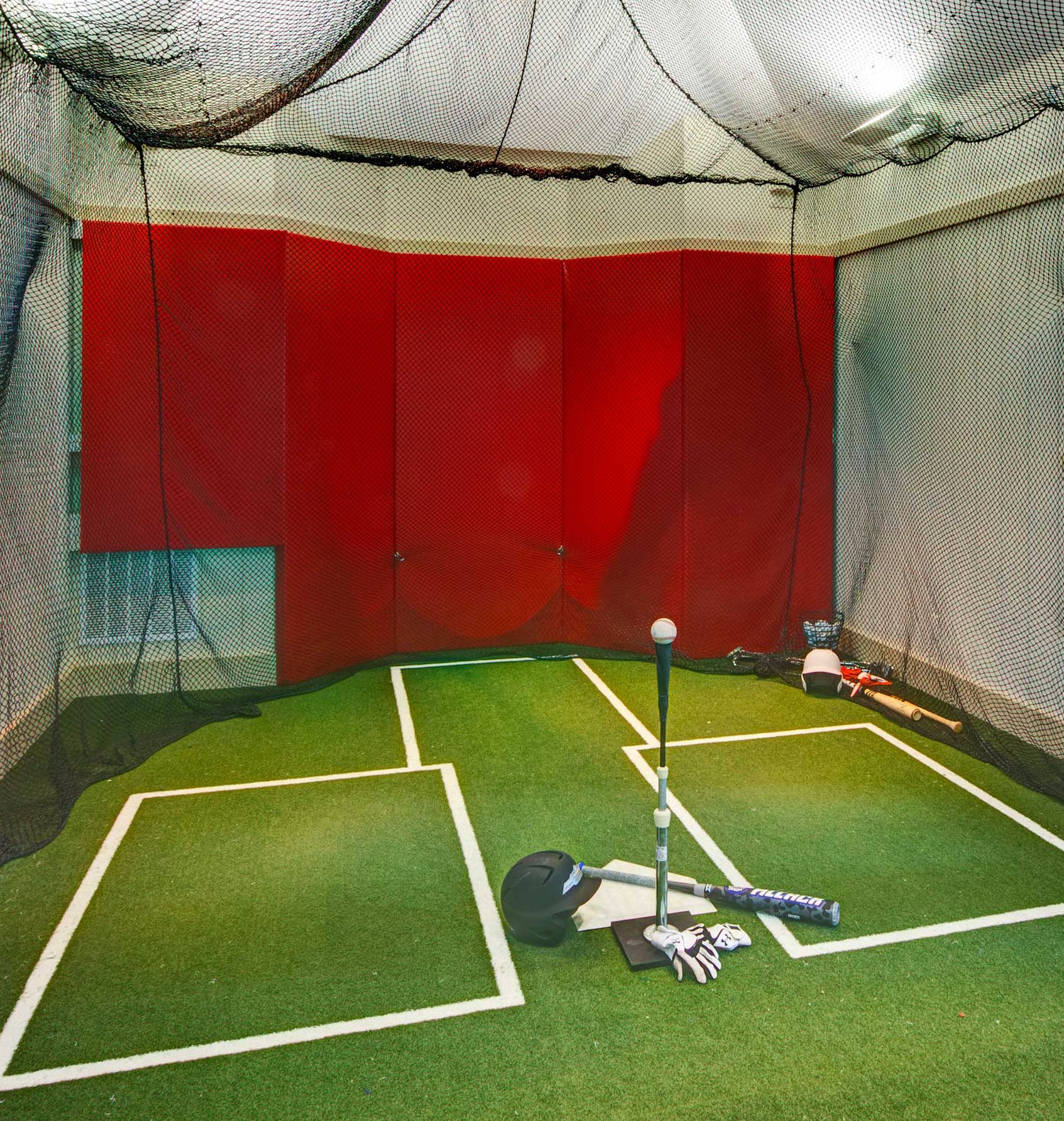
To determine how much space you and/or your hitters need, grab a bat and swing. Move around your garage to find the ideal location for your cage.
Consider who will use the cage. If it is strictly for children, you may be able to get away with a smaller cage. However, if adults will also be practicing, build the cage to fit the widest swing. Keep in mind that children grow. If you want a long-term solution, it is best to stick to the minimum of 12 feet rule.
DIY With Rafters
If your garage happens to have exposed rafters, all it takes is a few hook screws to easily install your batting cage.
-
Install screws into rafters roughly every two feet.
-
Attach snap hooks to net.
-
Attach net with snap hooks, or zip ties with NetShield, to hook screws.
Plus, if at some point you need more garage space, just unhook your netting from the screws and store it until needed.
Contact us with installation questions. We're happy to provide step-by-step instructions by phone or email.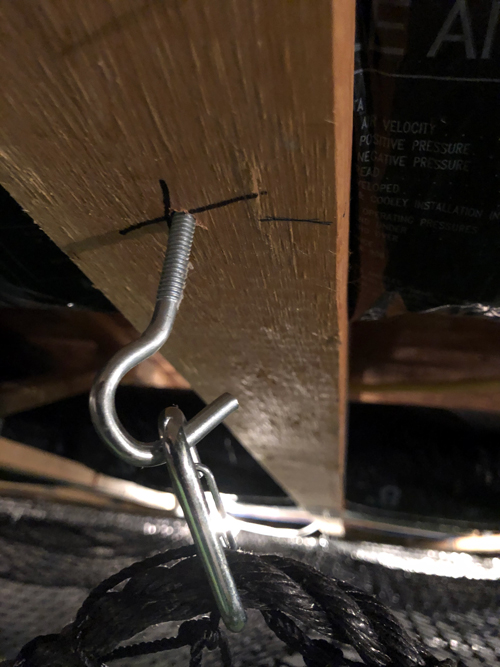
DIY Without Rafters
If you don’t have exposed rafters in your garage, install a few wall-to-wall, overhead cable lines at least a foot away from the ceiling and at least three feet away from functional lights. With this method, it's important that your cable lines do not get in the way of the functioning garage door.
-
First, install overhead cable lines.
-
Never install directly into the drywall; instead, try to install into the wood headers for maximum strength.
-
-
Next, clip snap hooks to the border rope and ceiling rib line of your net.
-
Finally, clip the snap hooks, or zip ties with NetShield, to your overhead cable lines.
-
When not in use, you can collapse your net along the cable lines against one wall.
Contact us with installation questions. We're happy to provide step-by-step instructions by phone or email.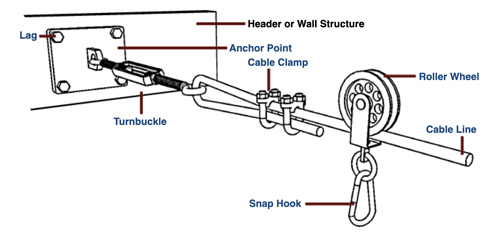
Netting vs. NetShield
When it comes to netting for your garage batting cage, picking a strong net that allows minimum push-through is key. Another main concern is space. With NetShield, the netting barely moves when hit (
), which means it protects lights, walls, and walking paths while providing the maximum playing area for hitters.Compare installation distance requirements in NetShield vs. standard netting:
|
Space required between the netting and: |
NetShield |
Other Nets |
|---|---|---|
|
Wall |
4-6 inches |
1-3 feet |
|
Ceiling/Lights |
3 feet |
3-5 feet |
|
Walking Paths |
1-2 feet |
5-10 feet |
As you can see, NetShield greatly reduces ball push-through to protect your walls, delicate objects (such as lights and windows), and spectators. Of course, soft and squishy baseball/softballs may always be used for extra protection.
With an estimated lifespan of 10-15 years for impact areas, NetShield outlasts the competition by 10+ years. Additionally, anyone can
. For those who already have a garage batting cage, limit push-through in vulnerable spots by adding NetShield inside or outside of the existing netting.Best Uses:
-
Along walls to prevent damage
-
Behind batter for “impact zones”
-
Behind pitcher for “batter’s eye”
-
Isolated ceiling areas to protect HVAC/lights
-
Hanging from the ceiling to contain balls
Specs:
-
Vinyl-coated mesh
-
13.5 ounces per square yard
-
Double-hemmed vinyl border
-
Top-only grommets every 12 to 18 inches
-
Colors: Black, Forest Green, Green, Blue, Navy Blue, Red
-
3-year warranty
Contact Us
Contact us today for a free quote and expert guidance.
1-800-877-6787 Monday through Friday 8:00 AM to 5:30 PM CST.
Follow us on Facebook for inspiration and exclusive discounts.
Share this article
Related Articles
Getting Started: Frames, Cables & Layouts for Your DIY Batting Cage
How to Store a Retractable Batting Cage Net: Step-by-Step Guide